
CASA SOLO Arquitectos
RAFAEL DE LA-HOZ Arquitectura
MUNTO Arquitectura i Disseny
PHI PARTNERS
EINESA Ingeniería
CASA SOLO Arquitectos
RAFAEL DE LA-HOZ Arquitectura
MUNTO Arquitectura i Disseny
PHI PARTNERS
EINESA Ingeniería
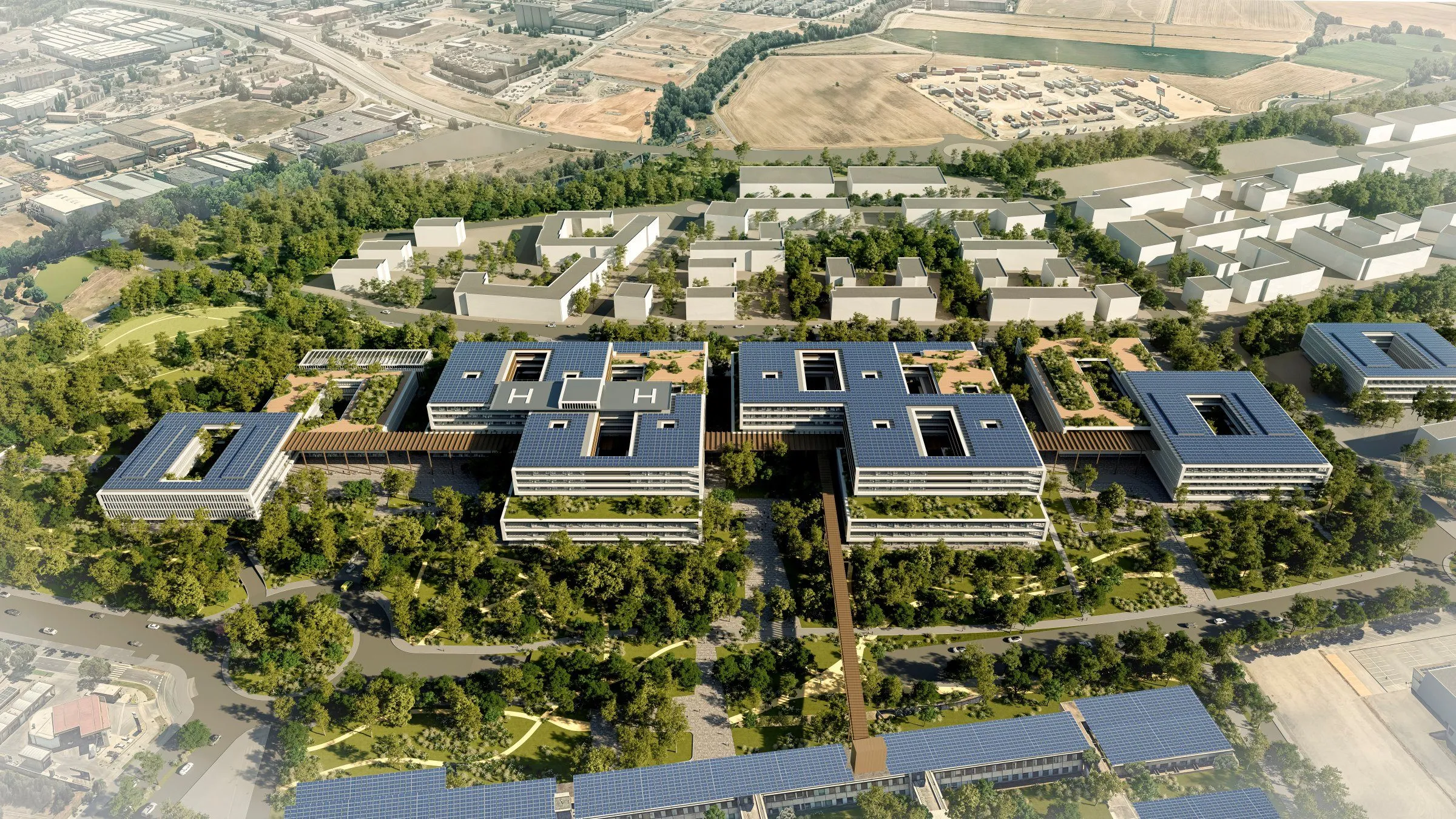
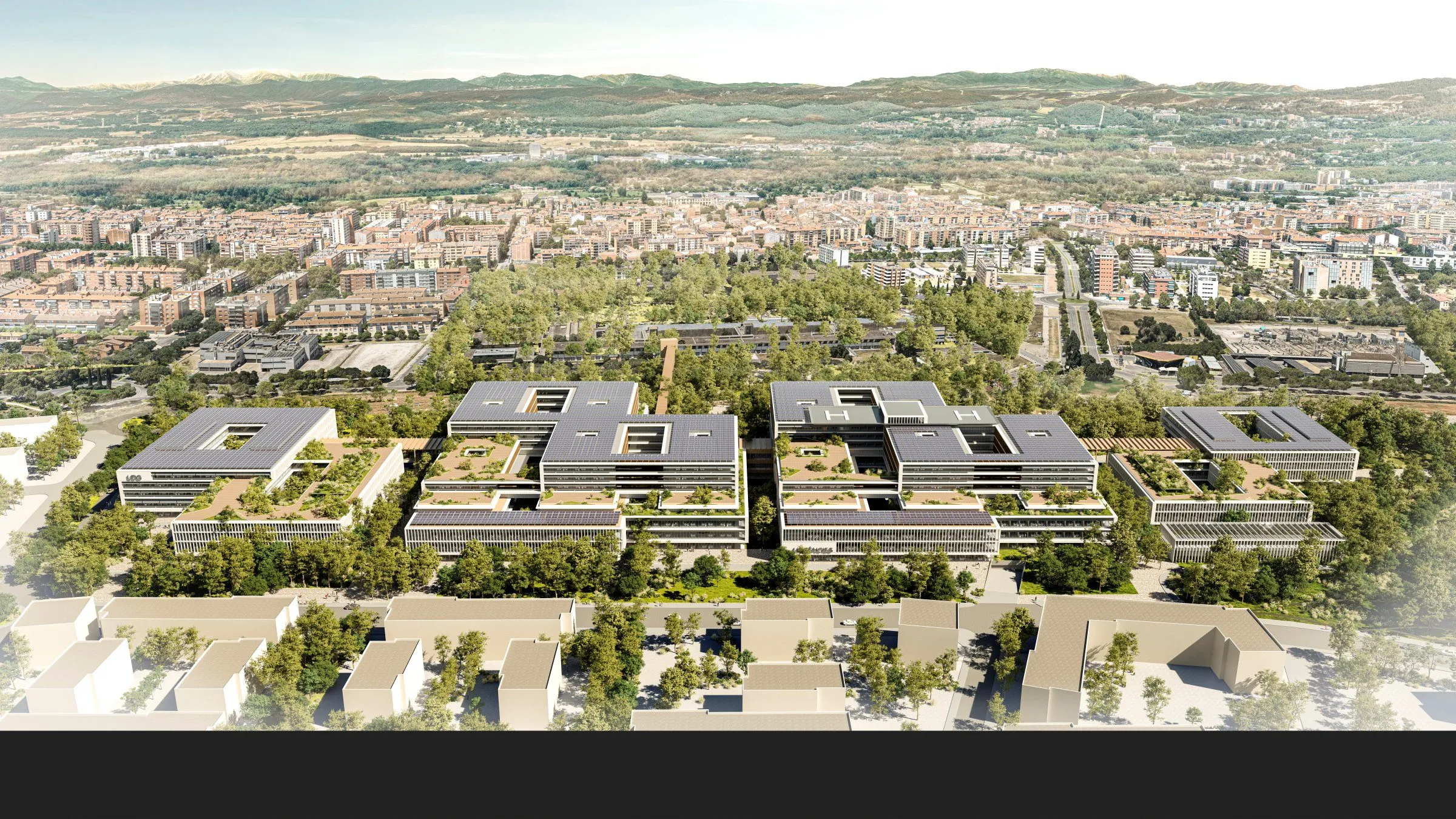
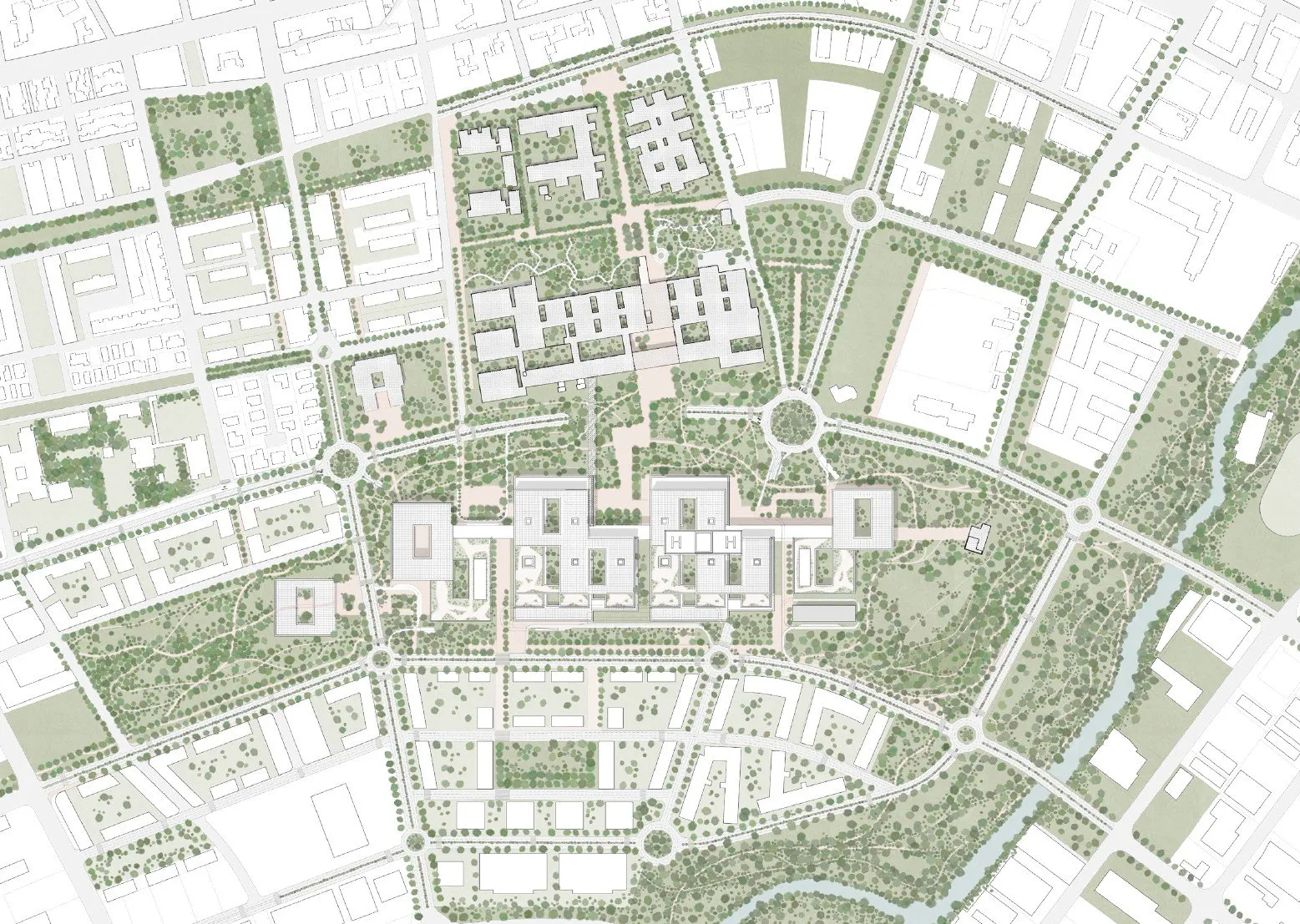
The implementation of the new Campus extends across the land between the towns of Salt and Girona, from east to west, aligning itself with the green corridors that define the avenues.
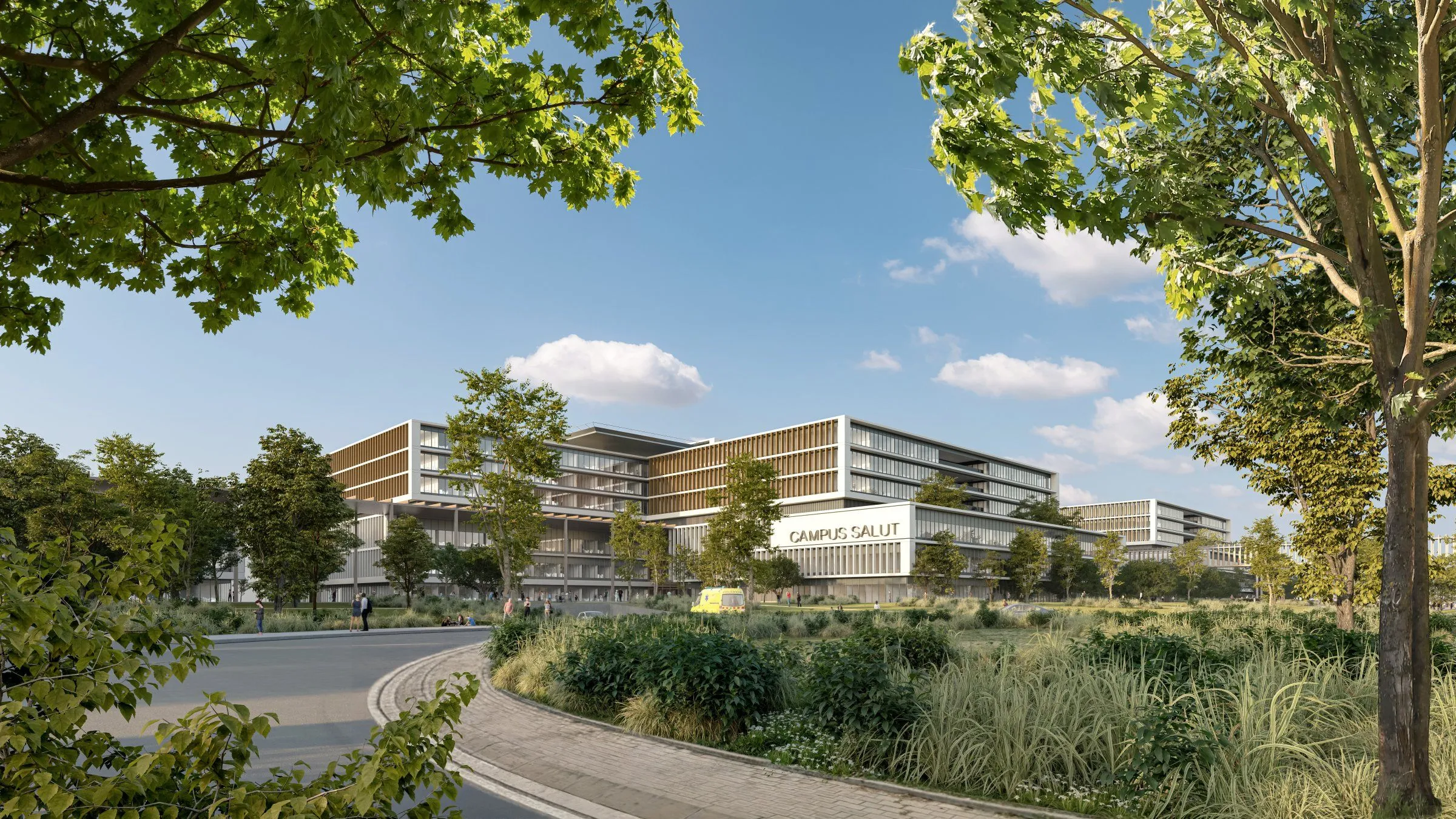
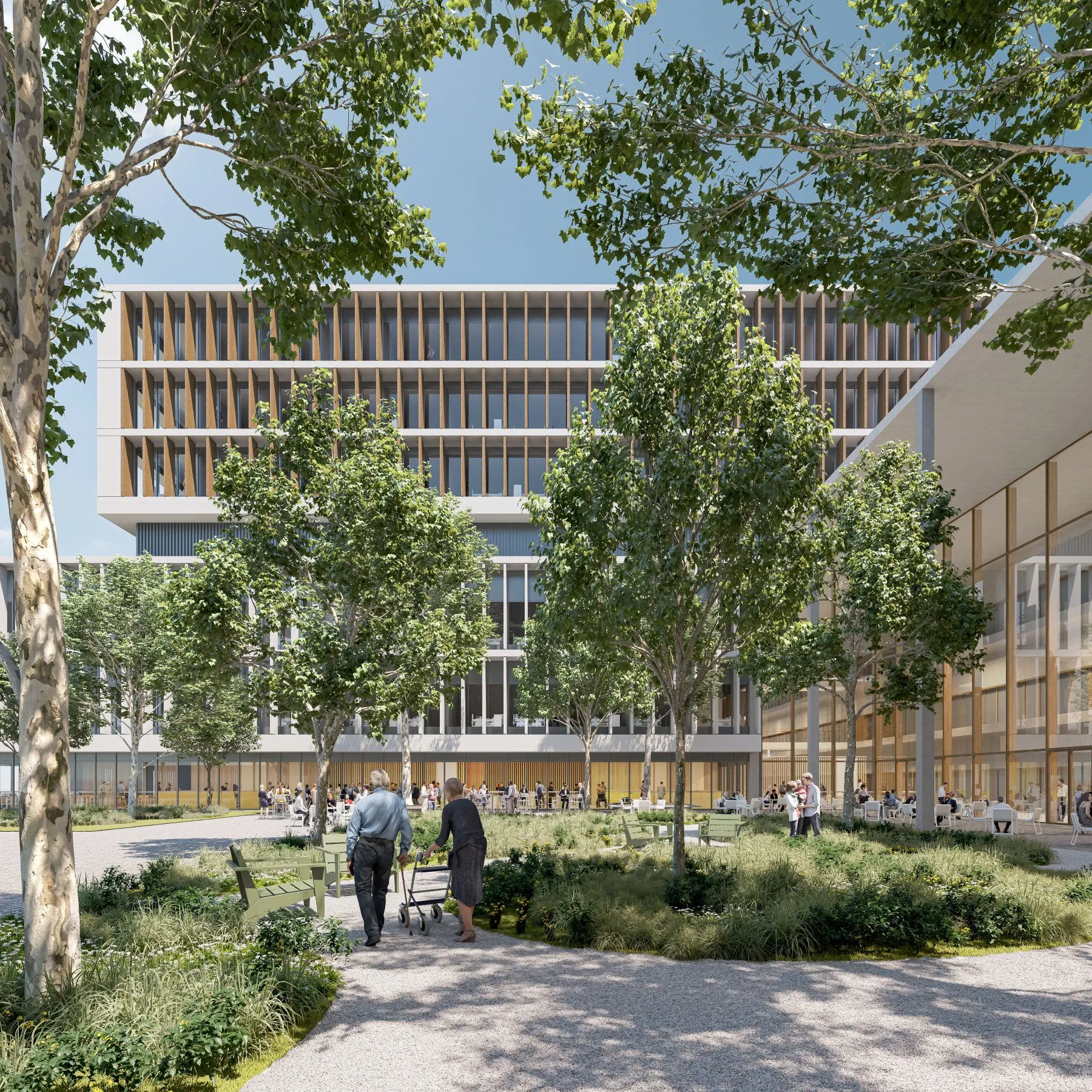
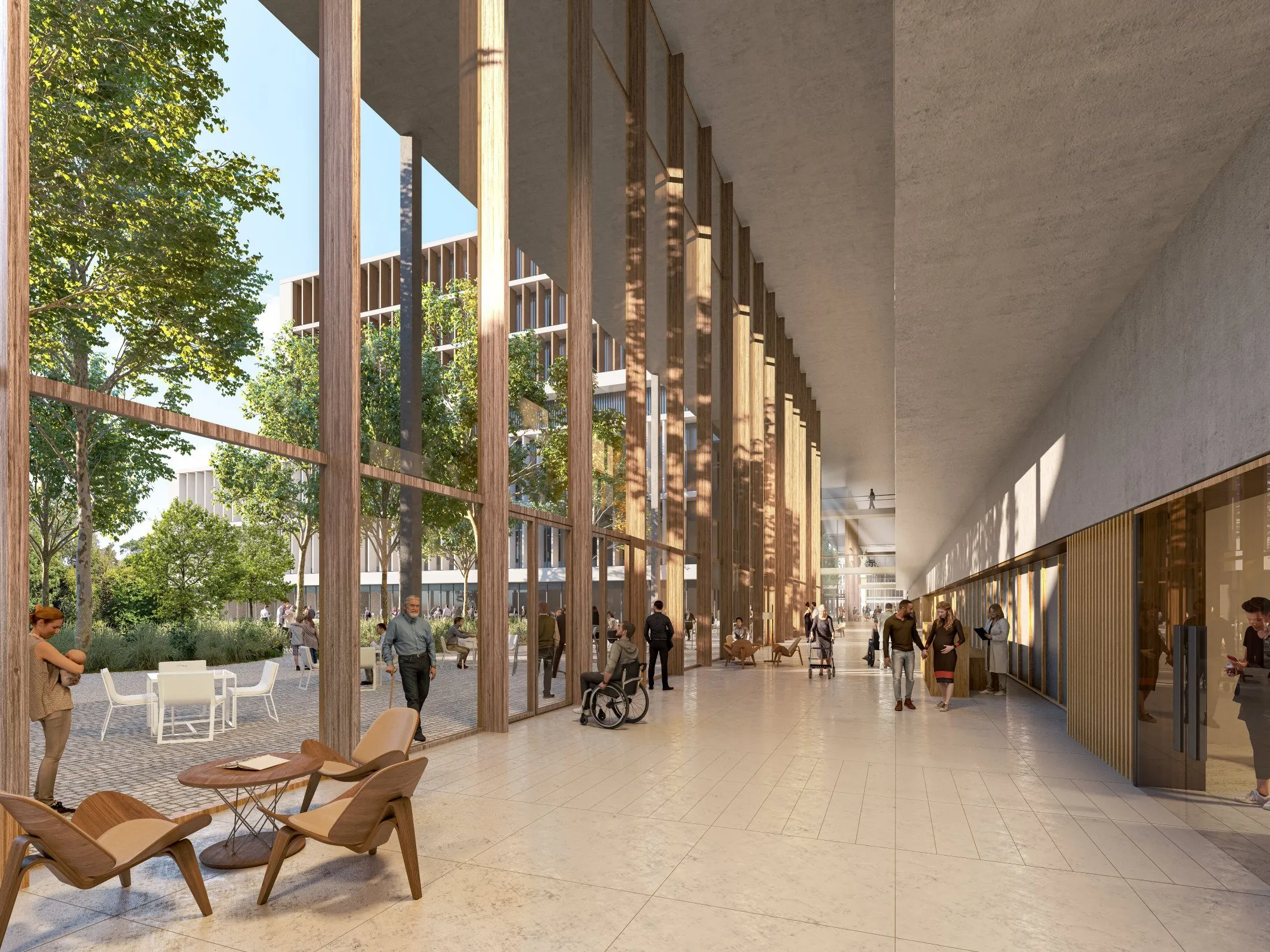
The Hospital block will become the central element of the campus, reaching the same size as the Santa Caterina Hospital in order to establish a direct frontal relationship. This block is organized into functional slabs crossed longitudinally by a major circulation axis.
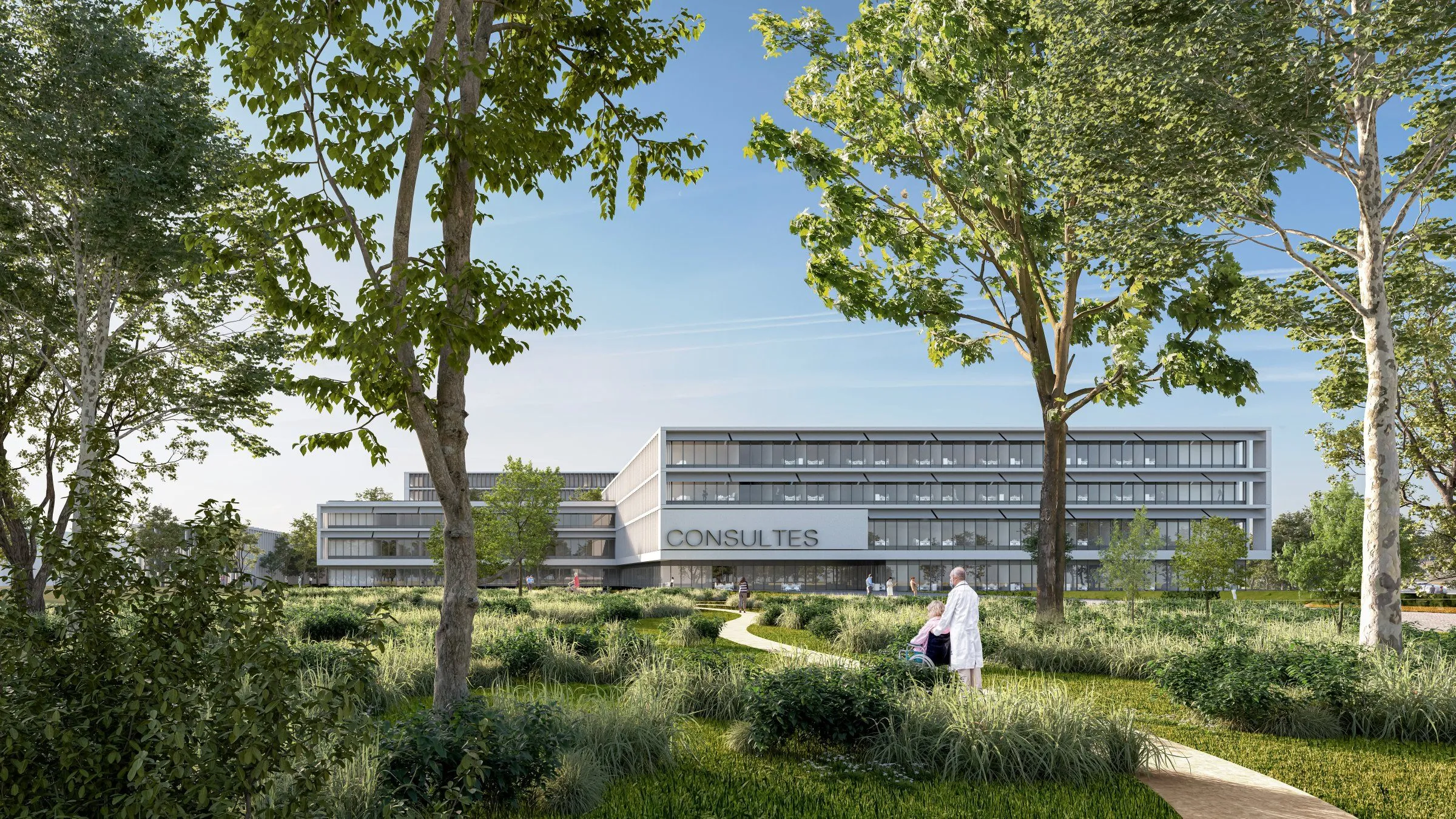
The outpatient services building is located on the eastern side of the site, strategically positioned near the urban centers of Salt and Girona. Placing this building in the east reinforces the goal of optimizing user accessibility, as it concentrates most of the mobility associated with the healthcare services of the Campus.
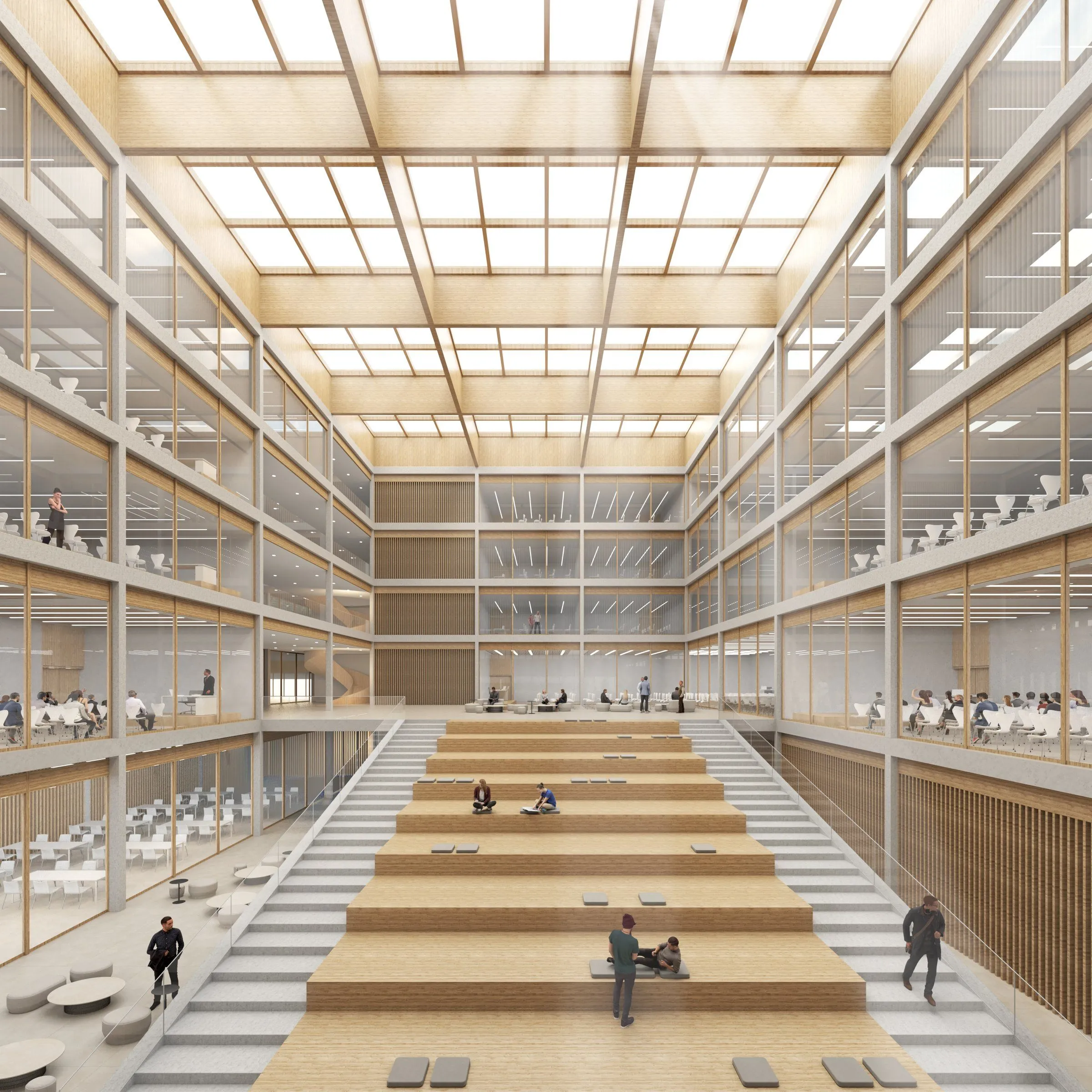
To the west, in relation to the future Business Hub, the University (UdG) building is located to facilitate and encourage the exchange of ideas and the creation of synergies between both buildings, while also promoting people’s mobility. Locating both the Hub and the University in the west supports the project’s intention to bring these uses close together in a compact layout, integrating the existing educational building (UdG School of Health and Sports Sciences and College of New Technologies).
The landscape proposal is based on a regenerative and contextual approach, aiming to reconnect the hospital with the fluvial landscape of Girona and Salt, improving accessibility, environmental comfort, and user well-being. The project conceives open space as a living ecosystem, capable of managing water, generating biodiversity, offering spaces for health and social interaction, and adapting to future climatic and hydraulic changes.
In a project of this scale, the available dimensions and space make it possible to decisively opt for industrialization. The strategy is to prefabricate 2D elements in a workshop, with a high degree of built-in equipment and installations, in order to minimize on-site construction time and ensure a consistent level of quality.